
Guides Cats & the holidays
How to cat-proof a Christmas tree: 10 practical steps
Ten practical steps to a cat proof Christmas tree: one that can’t tip, decorations that are safe if a paw gets to them, and a better place for your cat to climb.
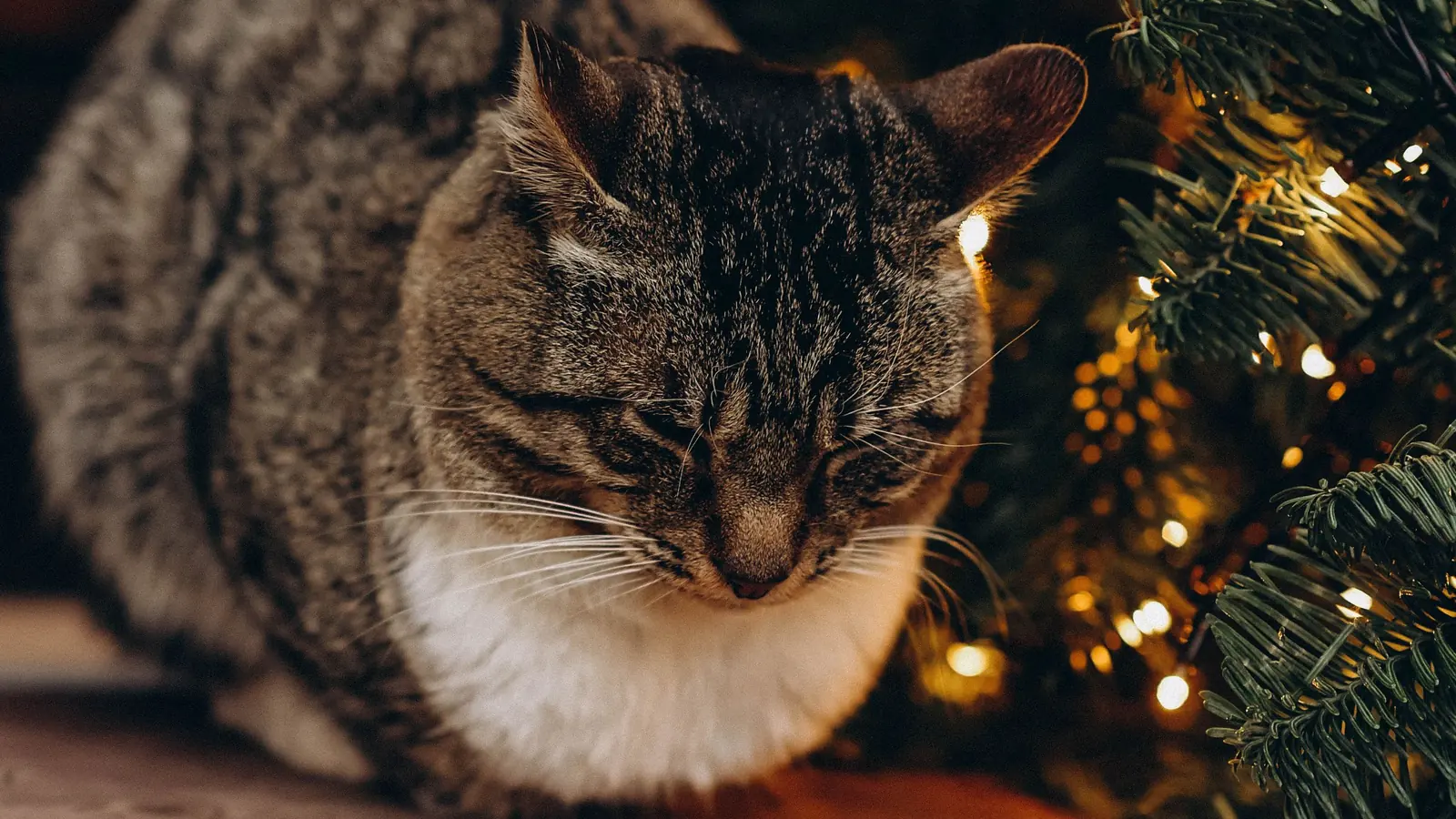
A Christmas tree is, from a cat’s point of view, a brand-new climbing structure that showed up overnight, covered in things that swing, sparkle, and roll. It is no surprise that so many cats try to climb it, bat at it, or chew it. The good news is that you do not have to choose between a tree and a cat. A cat-proof Christmas tree is mostly about three things: a tree that cannot tip, decorations that are not dangerous if a paw (or a mouth) gets to them, and something better for your cat to climb instead.
Below are the steps in the order you would do them, with links to the veterinary and poison-control sources behind each safety point.
Emergency?
If your cat has already eaten something it shouldn’t have — tinsel, ribbon, a chewed light cord, a holiday plant — call your veterinarian or the ASPCA Animal Poison Control Center at (888) 426-4435 right away, as the ASPCA recommends. Do not wait to see whether symptoms show up.
Quick answer
Quick answer: the 10 steps at a glance
- Choose a smaller or artificial tree, or a live tree that holds its needles.
- Anchor the tree at the base and near the top so it cannot tip.
- Place it away from sofas, shelves, and other launch pads.
- Cover the water bowl of a live tree, and skip water additives.
- Keep breakable, food-based, and dangling ornaments off the lower branches — or skip them.
- Leave out tinsel and long ribbon entirely.
- Protect light cords and unplug them when no one is home.
- Keep lilies, holly, and mistletoe out of the house or fully out of reach.
- Use gentle deterrents, not scented oils or sprays.
- Give your cat a better place to climb.
01Set up
1. Choose a tree that suits a house with a cat
Size is the first decision. A smaller tree — or a tabletop tree placed somewhere your cat cannot reach — is simply a smaller target, and if it does go over, there is less to fall.
Real or artificial both work, but they bring different risks. Pet Poison Helpline suggests an artificial tree so a cat cannot get at sap, tree water, or pine needles, which it notes can cause nausea, vomiting, skin irritation, or injury to the stomach (Pet Poison Helpline). An artificial tree is not risk-free, though: PetMD points out that chewed plastic or aluminum can still irritate the mouth or cause an intestinal blockage if pieces are swallowed (PetMD).
If you prefer a live tree, the common Christmas trees (fir, pine, spruce) are considered only mildly toxic, with ingestion usually causing drooling and vomiting from irritation (Pet Poison Helpline). The bigger problem is fallen needles, which are sharp and hard to digest. PetMD suggests looking for a variety that tends not to drop its needles, such as a Nordmann fir (PetMD), and sweeping up whatever does fall every day.
02Set up
2. Anchor the tree at the bottom and the top
Most important step
This is the single most important step. The ASPCA’s first Christmas-tree tip is to make sure the tree is tightly secured so it cannot tip over and hurt a pet (ASPCA), and Pet Poison Helpline specifies securing it at both the top and the bottom (Pet Poison Helpline).
- Start with a wide, heavy stand. A stand that is wide relative to the tree’s height resists a cat launching off the trunk.
- Tie the top back to the wall or ceiling. Run clear fishing line or thin wire from the upper trunk to a small screw hook in the wall, window frame, or ceiling. It is nearly invisible and stops the tree from swinging forward.
- Test it. Push firmly on the upper third of the tree from several directions. If it sways noticeably, add a second tie-back before any ornaments go on.
03Set up
3. Pick the right spot in the room
Cats rarely climb a tree from the floor alone; they jump into it from something nearby. Look around the spot you have in mind and move the tree away from sofas, armchairs, bookshelves, cabinets, and window sills that could work as a launch pad. A corner is often the best location because two sides are protected and the tie-back has a wall to attach to.
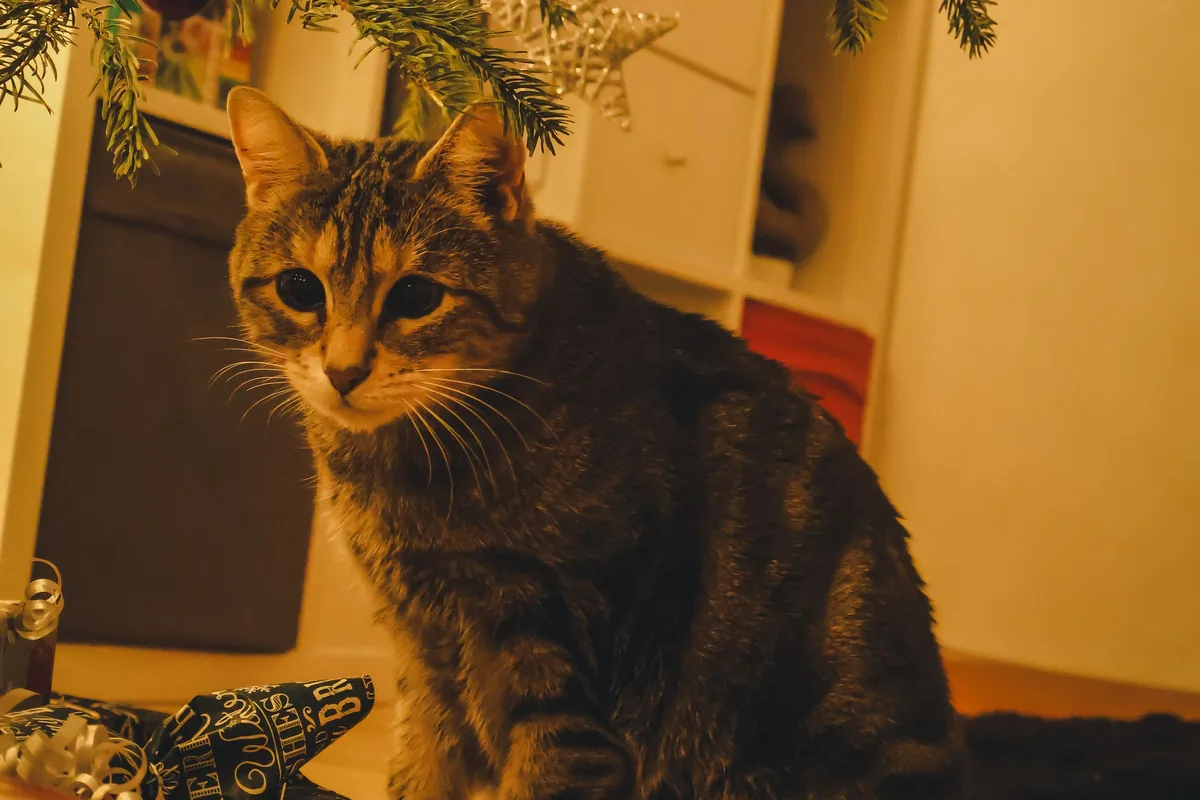
If you can, set the tree up in a room you can close off at night and when you are out.
04Set up
4. Cover the tree water (and skip the additives)
A live tree drinks from an open bowl of water at floor level, which many cats treat as a new water dish. The ASPCA warns that tree water can breed bacteria that cause nausea, diarrhea, or stomach upset (ASPCA), and that it may also contain fertilizers (ASPCA). PetMD adds that preservatives, fertilizers, and sugar substitutes such as xylitol sold as tree-water additives can be harmful to cats (PetMD).
Use plain water, and cover the reservoir completely — a tree skirt alone is easy to nose under. A stand with a covered reservoir, or a piece of stiff board or mesh cut to fit around the trunk, keeps the water out of reach while you can still top it up.
05Decorate
5. Decorate from the top down — and leave the bottom third quiet
Anything hanging within paw reach is an invitation to play. Keep the lowest third of the tree bare, or decorate it with a few large, unbreakable pieces that are fastened firmly. Put the special and fragile ornaments high up, close to the trunk, where they are harder to swat.
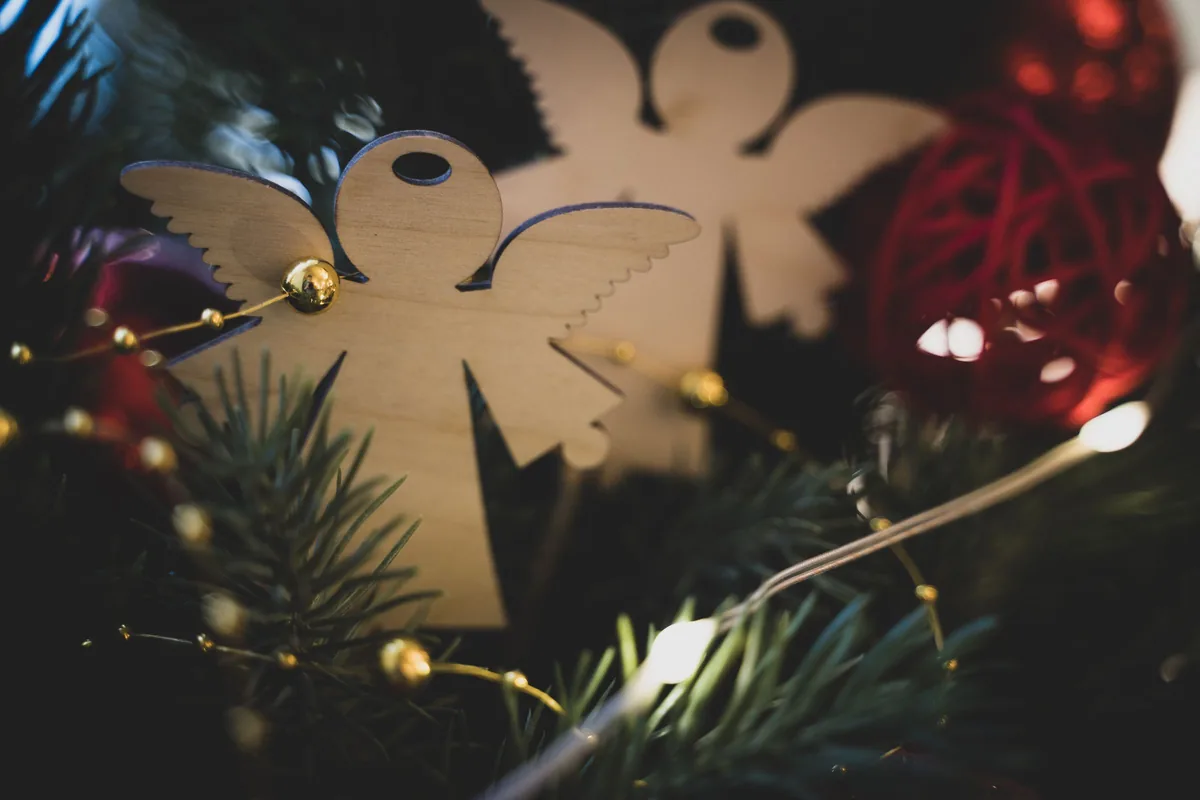
- Choose shatterproof ornaments. The ASPCA notes that shards of broken glass or plastic ornaments can damage a pet’s mouth and digestive tract (ASPCA). Wood, felt, fabric, and shatterproof ornaments are safer choices; the ASPCA also suggests wood, fabric, or pinecones as non-toxic decorations (ASPCA).
- Fasten them properly. Open wire hooks let an ornament slide off with one swat. Crimp hooks closed around the branch, or use clip-on hangers.
- Leave out edible decorations. Popcorn garlands, candy canes, and other food decorations attract attention. The ASPCA specifically warns that salt-dough ornaments — even once dry — can cause life-threatening electrolyte imbalances in pets (ASPCA).
- Keep snow globes elsewhere. The ASPCA notes that many snow globes contain ethylene glycol (antifreeze), which is highly toxic to pets if a globe breaks and is licked (ASPCA).
Free printable
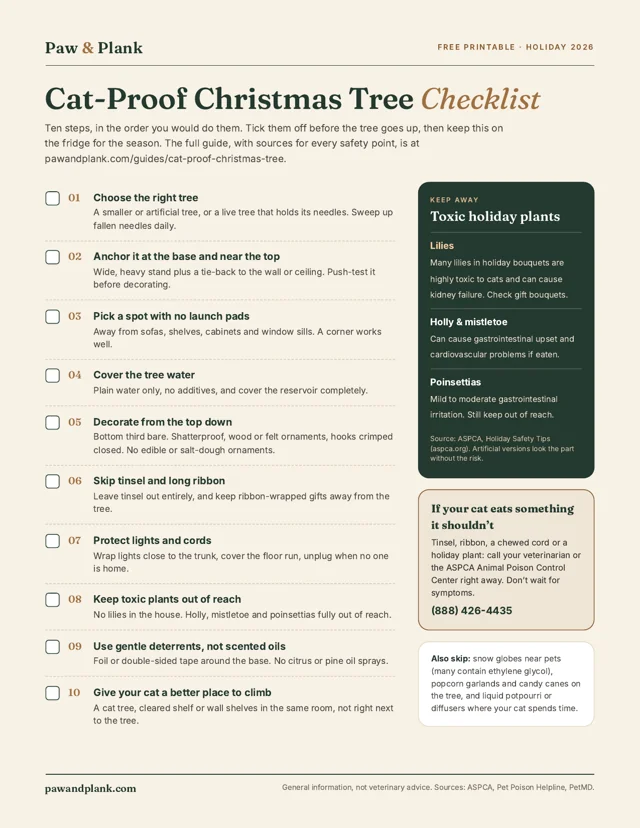
Get the one-page Cat-Proof Christmas Tree Checklist
All 10 steps with tick boxes, plus the holiday plants to keep away and the poison-control number, on one page you can stick on the fridge.
Instant download after you sign up. You’ll also get occasional Paw & Plank emails; unsubscribe anytime. See our privacy policy.
06Decorate
6. Skip the tinsel and the long ribbon
Leave the tinsel in the box
If there is one decoration to leave out completely, it is tinsel. Cats love it because it is light, shiny, and easy to carry, but the ASPCA warns that swallowed tinsel can cause severe vomiting, dehydration, and an obstructed digestive tract that may need surgery (ASPCA). Pet Poison Helpline calls tinsel a common cause of feline bowel obstruction (Pet Poison Helpline).
Long ribbon is a similar risk. Pet Poison Helpline explains that swallowed ribbon can cause a linear (string) obstruction, a particularly dangerous kind of blockage, and that cats with one may keep eating and drinking for a while, which hides the problem (Pet Poison Helpline). Wrap gifts without long ribbon, or keep wrapped presents away from the tree until the day you open them.
07Decorate
7. Protect the lights and cords
A dangling cord is a chew toy waiting to happen. The ASPCA notes that a chewed wire can deliver a potentially lethal electrical shock and that a punctured battery can burn the mouth and esophagus (ASPCA). Pet Poison Helpline adds that if you ever find a chewed cord, the cat should be seen by a vet right away (Pet Poison Helpline).

- Wrap lights snugly around the inner branches near the trunk rather than draping loose loops on the outside.
- Run the cord down the back of the trunk and along the wall, and cover the floor run with a cord cover.
- Keep battery-powered decorations (and spare batteries) out of reach.
- Unplug the lights when you go to bed or leave the house. A plug-in timer makes this automatic.
08Decorate
8. Keep toxic holiday plants out of reach
Holiday plants are not all equally risky:
Lilies: keep them out of the house
The ASPCA warns that many types of lilies found in holiday bouquets are highly toxic to cats and can cause kidney failure (ASPCA). The safest approach is to keep lilies out of a home with cats entirely, and to check bouquets you receive as gifts.
- Holly and mistletoe can cause gastrointestinal upset and, the ASPCA notes, cardiovascular problems if eaten (ASPCA).
- Poinsettias are less dangerous than their reputation: the ASPCA describes their effect as mild to moderate gastrointestinal irritation (ASPCA). It is still worth keeping them out of reach.

Artificial versions of all of these look the part without the risk, which is what the ASPCA suggests if your cat is a plant chewer (ASPCA).
09Train & redirect
9. Use gentle deterrents — not scented oils
A few low-key deterrents can teach a cat that the tree is not a toy, especially in the first days:
- Change the texture around the base. Some cats dislike walking on aluminum foil or sticky surfaces, so a ring of foil or double-sided tape on a mat around the stand can discourage approaches.
- Redirect, don’t punish. When your cat heads for the tree, calmly move it to a toy or a climbing spot it is allowed to use, and reward it there.
Skip citrus and pine oil sprays
Citrus or pine essential-oil sprays sold or recommended as cat repellents. Pet Poison Helpline lists citrus oil and pine oil among essential oils known to poison cats, which are especially sensitive because of how their liver processes these compounds (Pet Poison Helpline). The same caution applies to liquid potpourri and diffusers near where your cat spends time.
10Train & redirect
10. Give your cat a better place to climb
Cats climb trees because they want height. A cat that already has a good high spot — somewhere to perch, watch the room, and nap — usually finds the Christmas tree less interesting. Before the tree goes up, make sure your cat has an approved climbing route: a cat tree, a cleared bookshelf, or a run of wall-mounted shelves.
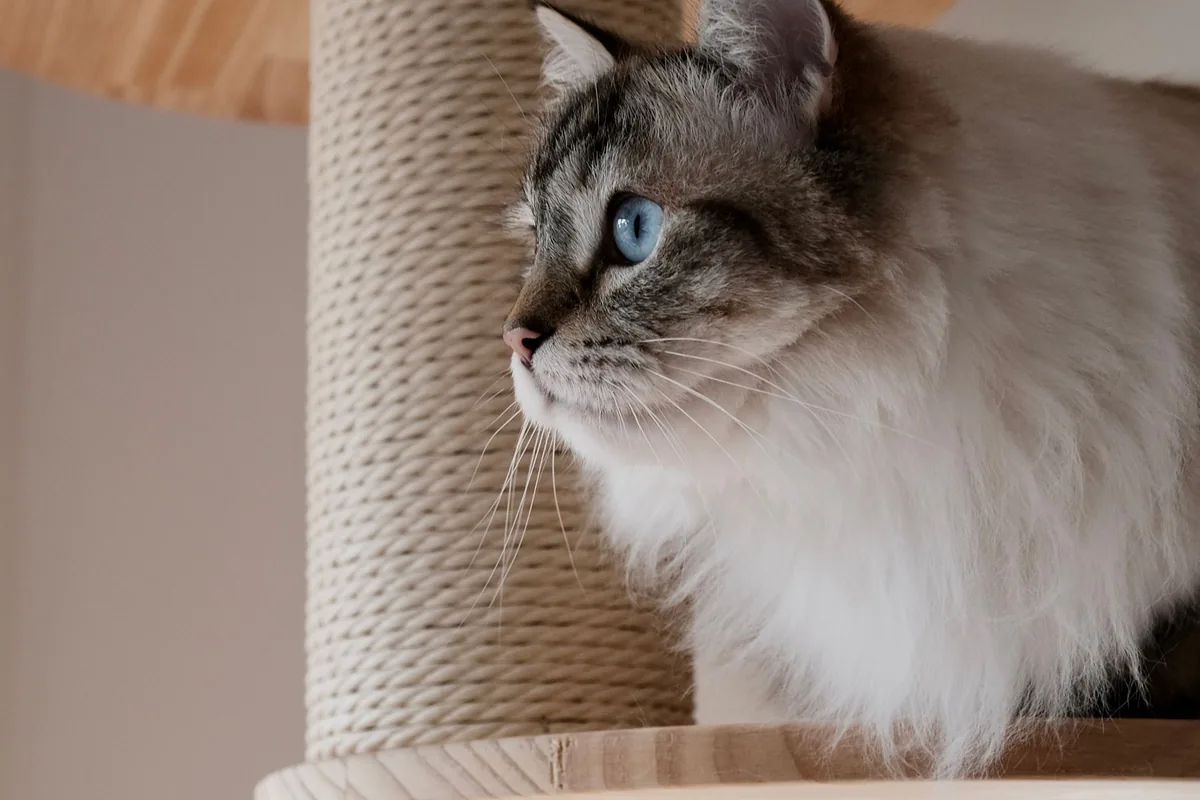
If you have been meaning to add vertical space anyway, our cat wall furniture collection covers cat wall shelves and climbing walls that keep the floor clear. Put the climbing spot in the same room as the tree but not right next to it, so it is an alternative rather than a launch pad.
Before the tree goes up
Print the checklist and tick it off as you go
The 10 steps from this guide on a single printable page. Free, instant download.
Occasional Paw & Plank emails, unsubscribe anytime. Privacy policy.
Good to know
Frequently asked questions
Is there such a thing as a fully cat-proof Christmas tree?
Not completely. What you can do is make the tree hard to tip, remove the decorations that are dangerous if swallowed or chewed, and give your cat something better to climb.
Are real Christmas trees toxic to cats?
The common Christmas trees — fir, pine, and spruce — are considered mildly toxic. Pet Poison Helpline says eating them usually causes mild drooling and vomiting from irritation. Sharp needles and the tree water are bigger concerns, so sweep up needles daily and keep the water bowl covered.
Is tinsel dangerous for cats?
Yes. The ASPCA warns that swallowed tinsel can cause severe vomiting, dehydration, and a blocked digestive tract that may need surgery. It is safest to leave tinsel off the tree entirely in a home with cats.
Are poinsettias poisonous to cats?
Poinsettias are less toxic than many people think. The ASPCA says they can cause mild to moderate gastrointestinal irritation. Lilies are far more dangerous: many lilies in holiday bouquets can cause kidney failure in cats.
How do I stop my cat from climbing the Christmas tree?
Anchor the tree so climbing does not reward your cat with a fall, move it away from furniture your cat can jump from, keep the bottom branches bare, and use texture deterrents such as foil or double-sided tape around the base. Most importantly, give your cat an approved high spot, like a cat tree or wall shelves, in the same room.
What should I do if my cat eats tinsel, ribbon, or a holiday plant?
Call your veterinarian or the ASPCA Animal Poison Control Center at (888) 426-4435 right away. Do not wait for symptoms to appear.